OpenDataSuite (ODS)
Very experimental
ODS is pre-alpha software; the first release is v0.0.1. Commands, flags, output and file formats change without notice. Results can be incomplete or wrong. Use it to explore and give feedback, and don't rely on it for production decisions.
ODS is an open-source toolkit for analytics engineering, written in Rust. It reads a
dbt project's compiled artifacts, answers questions about them, and runs dbt on only
what needs to run. It needs no account and collects no telemetry; only the ods state
commands that run dbt reach your warehouse, through dbt's own connection. Answers come
with the evidence behind them.
-
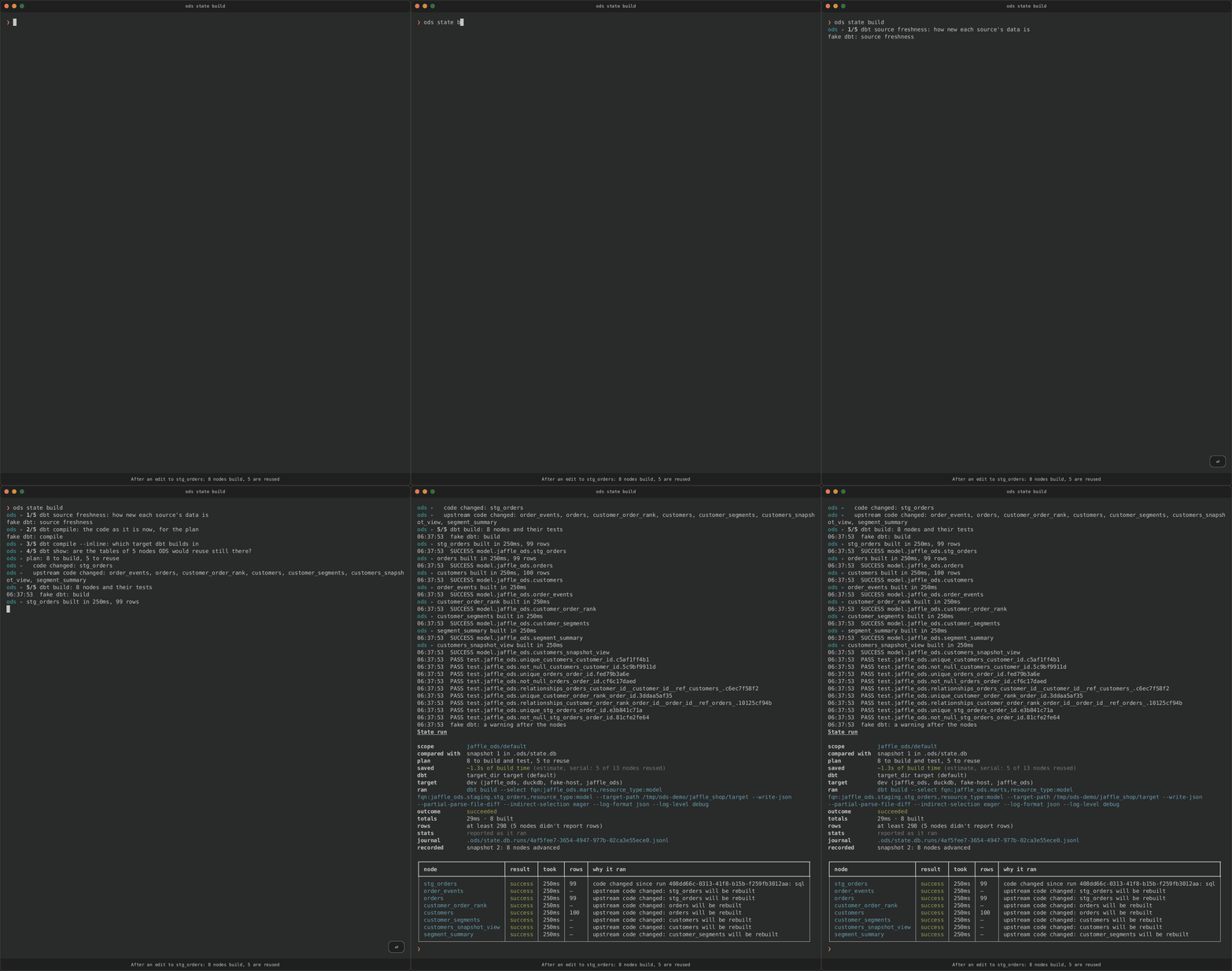
State: build only what changed.
ods state buildruns dbt on the models whose code or upstream data changed, reports each node's time and rows, and explains every decision. Getting started → -

A read-only dashboard.
ods serveshows the plan, the runs with each node's stats, lineage coloured by what the next run does, and the catalog. The dashboard → -
Column-level lineage. Where every column comes from and what uses it, down to joins, filters and aggregations. Includes an offline explorer. See it on a demo project →
-
Change impact. Which models must run when a column changes, and which can be skipped because they don't read it. How impact is decided →
-
Entity-relationship diagrams. Keys and relationships from your tests, constraints and joins, each labelled with how it's known. ERDs →
-
An MCP server for AI agents. The same engines as read-only tools for agents, including help writing SQL for people new to a project. MCP →
Try it in five minutes
cargo install --locked --git https://github.com/buchochelliq-labs/open-data-suite ods-cli
cd my-dbt-project && dbt compile
ods lineage view --open        # explore the lineage, offline
ods state build                # build what needs it, and record the run
ods serve                      # the dashboard, on http://127.0.0.1:8765/
Getting started has the details.
What makes it different
- Conservative. When ODS can't tell, it assumes the safer answer. It marks a model as affected, not skipped. It labels a relationship as a guess, not a fact.
- Explainable. Every decision carries a reason chain and evidence, as text and as JSON.
- Provider-neutral. dbt is the first project format and Databricks the first warehouse. Neither is built into the core (Principles).
- Open. ODS works with dbt through its public artifact formats, and is built on open-source libraries (Legal and trademarks).
ODS is an independent open-source project. It is not affiliated with, endorsed by or sponsored by dbt Labs, Databricks or any other vendor named on this site.